SOKCHO · PRACTICAL TRAVEL GUIDE
What to eat in Sokcho: market food and ordering tips
Understand dakgangjeong, local sundae dishes and seafood before choosing a stall or restaurant.
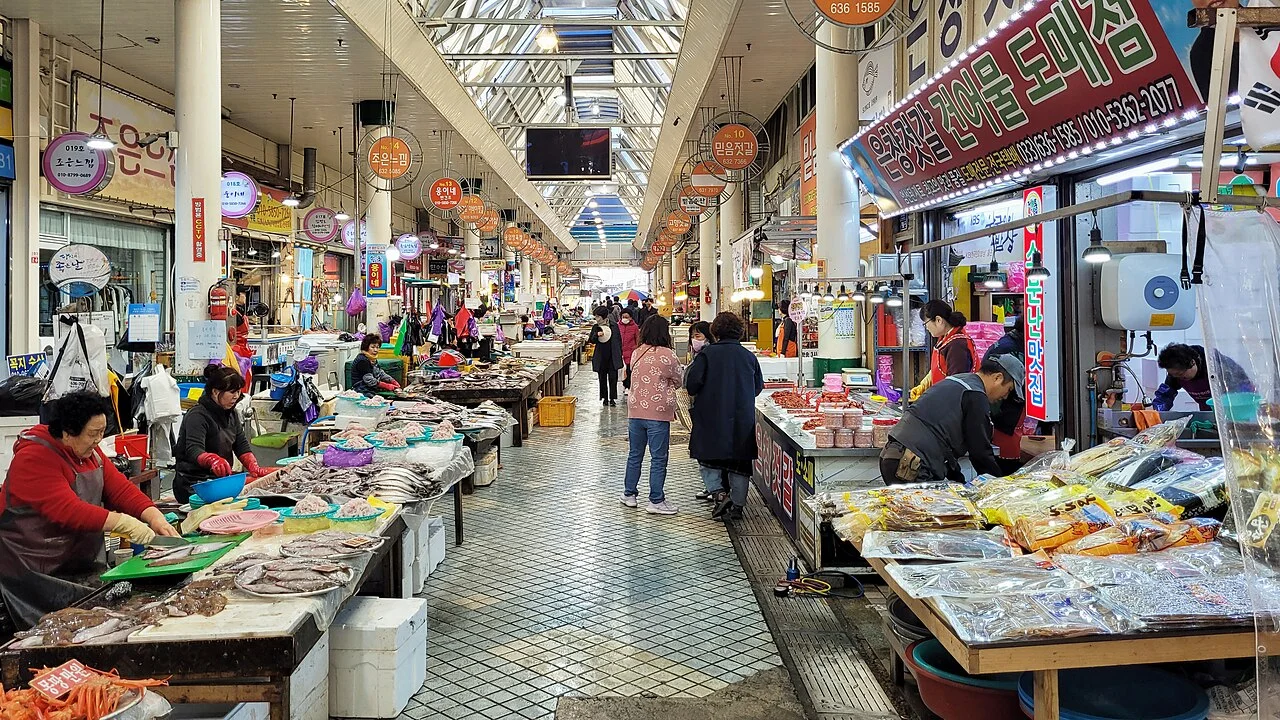
Sokcho market photograph: Bernard Gagnon / Wikimedia Commons · CC0 · resized and converted to WebP.

Dakgangjeong — 닭강정
Glazed fried chicken bites are an easy market starting point. Compare the portion size and sauce choice before buying a box; ask whether a smaller serving is available.
Ojingeo sundae — 오징어순대
This dish uses squid with a filling. Ask what is inside the particular version you are ordering. A familiar dish name does not guarantee the same ingredients at every restaurant.
Abai sundae — 아바이순대
Explore this local sausage dish in the context of Abai Village’s refugee history. Confirm the ingredients and serving style before ordering, especially if you avoid pork or animal products.
Mulhoe and seafood — 물회 · 해산물
Ask which seafood is included, whether it is raw, the portion size and the total price. At a seafood counter, check any preparation, table or side-dish charges before agreeing to the order.
Korean phrases to show
총 얼마인가요? — What is the total price?
조리비나 상차림비가 별도인가요? — Are cooking or table-setting charges separate?
작은 사이즈도 있나요? — Is a smaller size available?
어떤 재료가 들어가나요? — What ingredients are in it?
For allergies or dietary restrictions, explain the exact ingredient you need to avoid and confirm with the business. Do not rely on an illustration, translation or dish name alone.
Browse the market visitor guide and Abai Village guide. Food background: Korea Tourism Organization’s Sokcho seafood itinerary.
Plan a tasting visit without over-ordering
Start with one food you most want to try and choose a smaller portion if available. Share a suitable dish with your group, then decide whether you still want another snack. A large takeaway box can be inconvenient if the next stop involves a ferry or several kilometres of walking.
Keep a meal at Abai Village and a market tasting stop distinct if you want to experience both places. That gives each visit a purpose rather than making the day two back-to-back large meals.
A seafood price conversation in four steps
- Choose the item and ask how it is priced: per portion, per item or by weight.
- Confirm the quantity you are agreeing to buy and the final amount for that quantity.
- Ask whether preparation, table setting, side dishes or another service is charged separately.
- Repeat or show the agreed order before it is prepared. If you cannot clarify it, pause and choose another option.
More Korean phrases you can show
“포장해 주세요.” means “Please pack it to take away.” “여기서 먹을 수 있나요?” asks “Can we eat here?” “맵지 않게 가능할까요?” asks whether a less spicy version is possible, rather than guaranteeing the dish can be changed.
If avoiding an ingredient, name it specifically. For example, “돼지고기가 들어가나요?” asks “Does it contain pork?” A question about ingredients is a starting point for a clear answer, not certification that a dish meets a dietary requirement.
Food questions
Should I choose the busiest stall? A queue can show interest, but it does not tell you the portion size, price or suitability for your needs. Read the menu first.
Can I use a picture to order? It can help identify a dish, but confirm the actual contents and quantity with the business. The name or photograph may not show every ingredient.
Keep planning your Sokcho trip
Reviewed 20 October 2026. Itineraries and durations are editorial suggestions. This page does not show live schedules, room availability, trail conditions or opening status.