Travel essentials
How to Pay in Korea: Foreign Cards, Tmoney, WOWPASS and NAMANE
By Korea Trip Mate · Published · Updated 2026-10-19
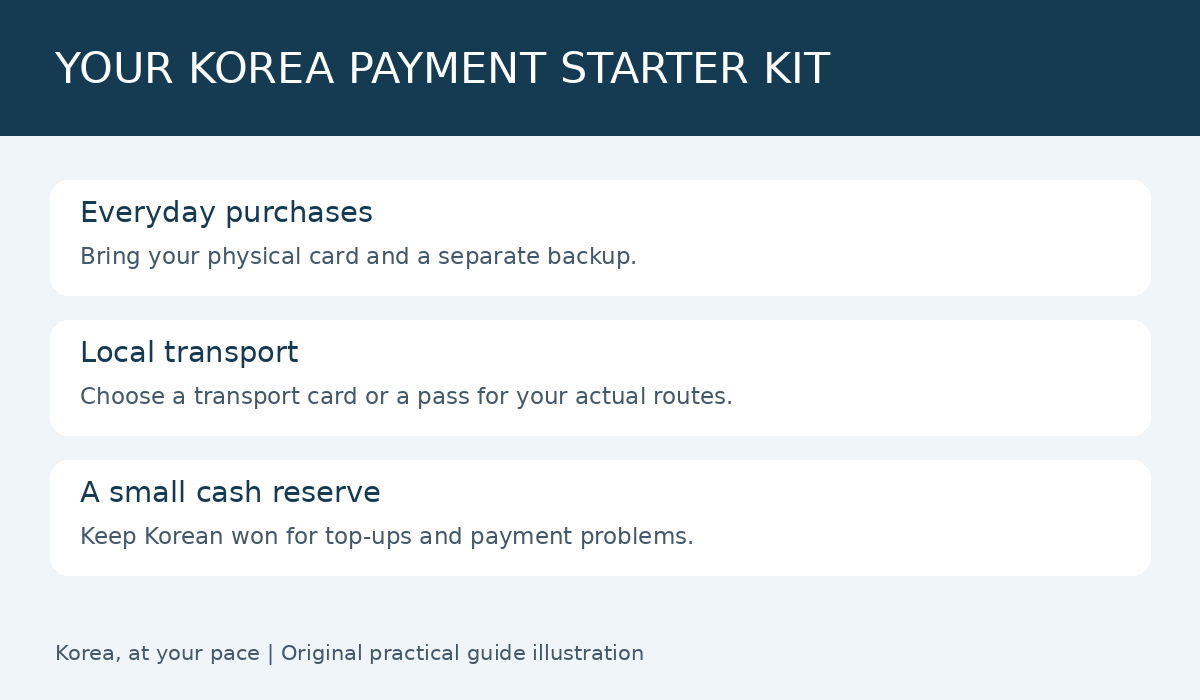
You have just landed in Korea. Your hotel is booked and your credit card is ready. Can you use that same card for dinner, a subway ride and a transport-card top-up? Do not assume these are the same transaction.
This guide is for short-term international visitors. Tourist prepaid cards are different from bank accounts and bank-issued cards for residents. Start with the card you already have, a suitable transport option and a small reserve of Korean won.
1. Prepare Your Existing Cards Before Departure
Ask your issuer whether overseas purchases and ATM withdrawals are enabled. Check your PIN, fees and how you will receive security verification while abroad. Bring a physical card even if you normally use a phone wallet, and keep a backup card separately.
If a purchase fails, ask whether the terminal accepts international cards. Try inserting the physical card, check your banking app for a security alert, and use a backup payment method if needed. One declined payment does not tell you whether every other terminal will accept your card.
2. At Incheon Airport: Plan the Journey Before Choosing a Card
An airport express train, an all-stop train and an airport limousine bus are separate services. Confirm payment options for the specific ticket or route you intend to use. Do not assume a city transport pass covers your airport arrival.
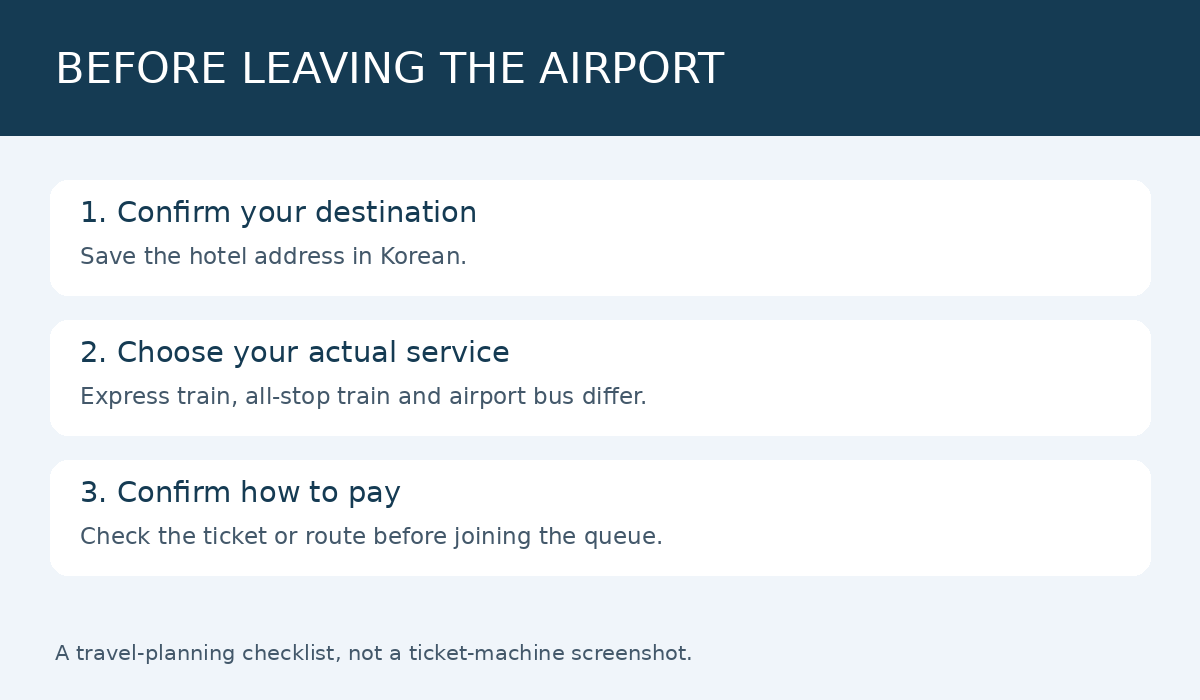
Before leaving the terminal, save your hotel address in Korean, confirm your route, and prepare a payment method for that journey. Keep some Korean won as a backup. Start with a modest prepaid top-up rather than loading your entire holiday budget at once.
Use our airport and transport guide to plan your arrival and our accommodation directory to check your destination.
3. Tmoney: Buying the Card and Charging It Are Different
Tmoney is a rechargeable transport-card option. A store accepting your foreign card for purchases does not automatically mean it can use that card to recharge a physical Tmoney card. Keep Korean won available for conventional cash top-ups; available alternatives depend on the card, app and charging facility.
Ask the cashier: “Can I buy a Tmoney card and add 10,000 won?” This is a starting example, not a fixed travel budget. The card purchase price and usable travel credit are separate. Check your balance and add more as you learn your travel pattern.
Keep the transport card separate from other contactless cards when tapping. Follow the entry and exit procedures shown for your service. See the official Tmoney tourist-card introduction.
4. WOWPASS: Check the Transport Balance Separately
WOWPASS offers a tourist prepaid payment service with a Tmoney transport function. Its official service describes kiosk issuance and cash or mobile funding options. Before travelling to a machine, use the current app to check the location, operating access, issuance requirements and charges. Bring your passport and the funding method specified for your selected option.
The important distinction is that payment and transport funds are separate. Adding money to the shopping balance does not automatically fund your subway journey. Check the transport balance and current top-up instructions in the app before riding.
Register the card in the app after issuance. The operator explains that a registered card can be paused if lost and reissued through its service. Check the WOWPASS official website and operator FAQ. Some older FAQ details may differ from newer app features; use the current in-app instructions for your transaction.
5. NAMANE: Choose Pay Balance or Transit Balance
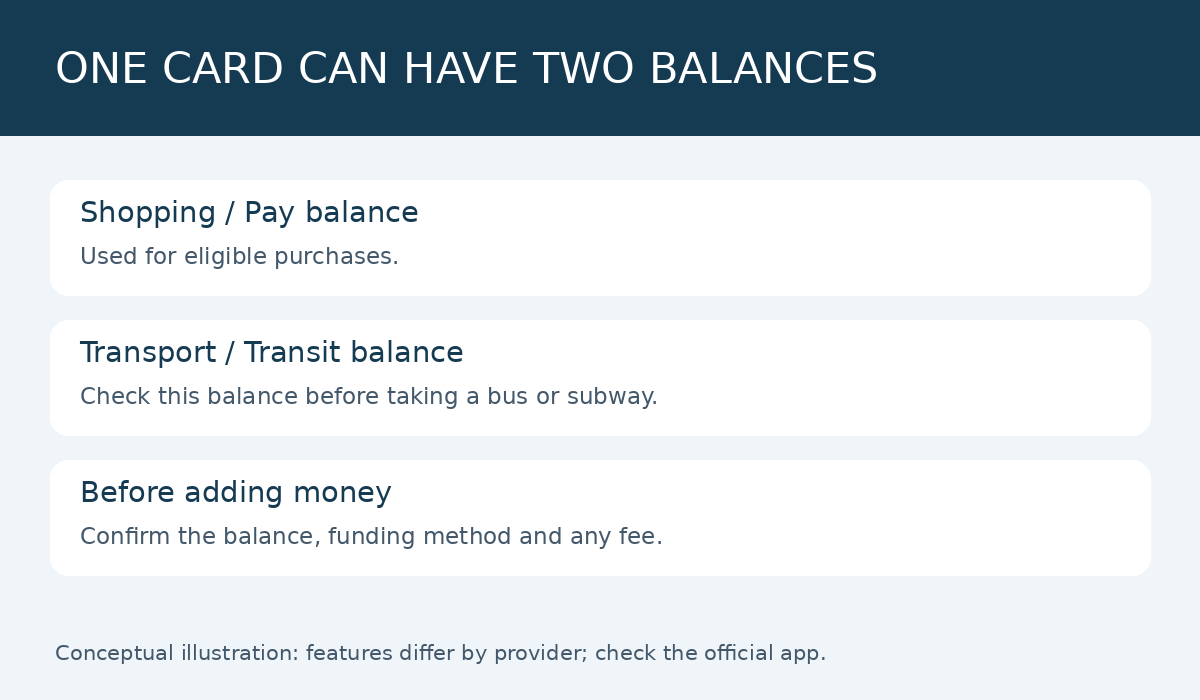
NAMANE distinguishes between Pay Balance and Transit Balance. Its official instructions describe moving funds from payment credit to transport credit in the app. The practical question is: “Did I add money to the balance I need?”
Check the kiosk location, current issuance fee, accepted funding method and any charge shown before confirming. Follow the instructions for your specific card and phone. If using an NFC feature, confirm device compatibility rather than assuming every phone supports it.
Consult the NAMANE card top-up instructions and Pay-to-Transit conversion guide. Check both balances before requesting a refund.
6. Mainly Travelling Around Seoul? Compare the Climate Card
The short-term Climate Card is a transport pass rather than a shopping card. Seoul lists 1-, 2-, 3-, 5- and 7-day options. Compare its valid service area with your actual itinerary before purchasing. A physical card costs extra, and supported facilities allow international-card purchases for short-term passes.
Do not treat this as a nationwide pass. Restrictions apply to routes such as the Sinbundang Line and airport buses. Incheon Airport rail use has direction-specific restrictions; check the official coverage before relying on it for an arrival journey.
Short-term pass validity begins on the charging date, so avoid activating several days before you intend to travel. Read the Seoul Metropolitan Government Climate Card guide for current coverage, prices and conditions.
7. Before Departure: Plan Refunds Early
Do not wait until boarding time to investigate leftover money. Check each balance separately and read the refund method, fee, deadline and identification requirements. Confirm the service point and opening hours before making a special trip.
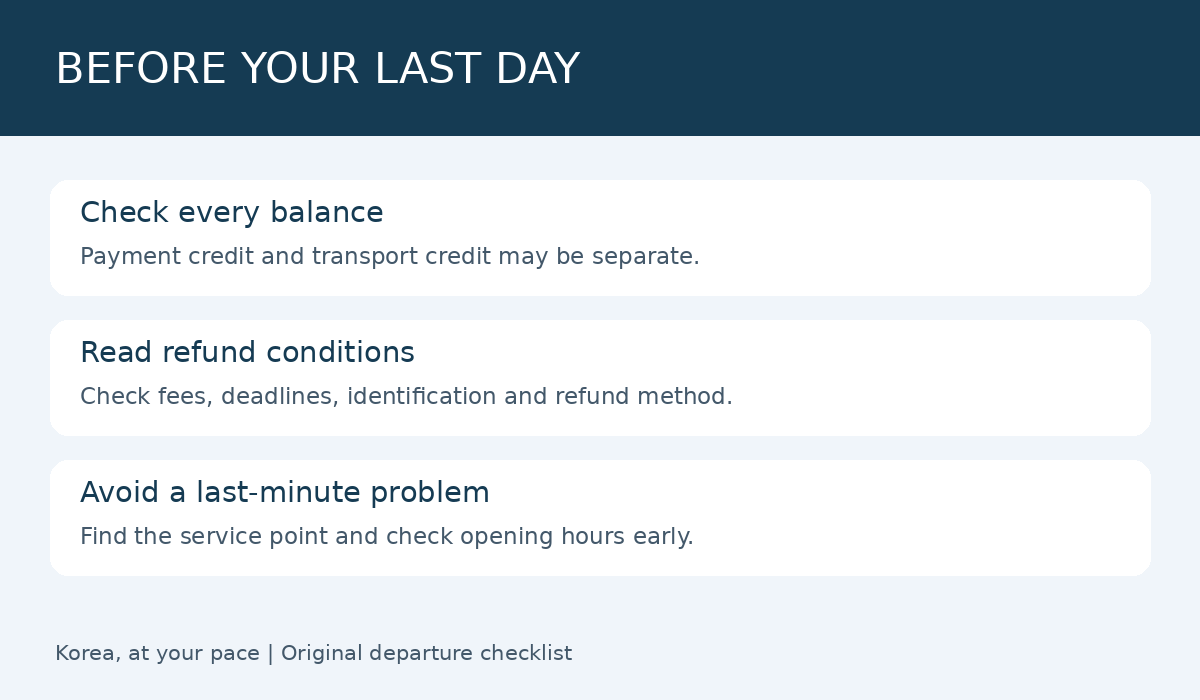
A shopping-balance refund may not include transport credit. Some methods may require an app, original funding method or an in-person visit. NAMANE publishes a payment-balance refund guide; check whether its conditions suit your funding method. Climate Card refunds must be requested during the valid use period, with deductions under the official rules.
Near the end of your holiday, make smaller top-ups to avoid leaving a large balance.
A Simple Choice for Your First Trip
If you prefer your existing cards: bring a physical foreign card, a backup, a transport option and some won.
If you want a tourist prepaid service: compare WOWPASS and NAMANE issuance, funding and refund conditions before buying.
If you plan frequent journeys mainly within Seoul: compare the short-term Climate Card with your exact routes.
You do not need every card available. Choose a setup that covers your airport journey, ordinary purchases and local travel, then check the right balance before you reach the gate.
Continue with our practical travel essentials, planning guides and places to stay.
Topics
Korea travel payments · Foreign cards in Korea · Tmoney · WOWPASS · NAMANE · Climate Card · Incheon Airport · First-time Korea travel
Sources and Updates
Official references: Tmoney, WOWPASS / Orange Square, NAMANE and Seoul Metropolitan Government, linked in the relevant sections. Reviewed 19 October 2026. Fees, funding methods, kiosk access and refund conditions can change. Confirm the current provider instructions before purchasing or loading money. All four checklist images are original editorial illustrations, not product photographs or representations of an actual card interface.
Find a Cash Exchange Location
See our Money & Exchange directory for selected Seoul and Busan branches and official Incheon Airport terminal directories. Listed hours are source-checked, not live opening information.